Hidden beneath the dense rainforest of North Bali lies a network of ancient paths that once connected mountain villages with the island’s northern coast. Long before paved roads and modern transportation, these trails served as vital trade routes, allowing local communities to exchange coffee, spices, rice, forest products, and daily necessities across Bali’s rugged highlands.
Today, many of these forgotten routes have become peaceful jungle trails, offering travelers a rare opportunity to walk through landscapes that have witnessed centuries of Balinese history.
Before Modern Roads, There Were Forest Trails
Centuries ago, traveling across Bali was very different from today. The island’s volcanic mountains divided communities, making movement difficult. Instead of highways, people relied on narrow footpaths that followed mountain ridges, rivers, and natural passes.
The Tamblingan Highlands occupied a strategic position between the fertile mountain villages of central Bali and the busy trading ports of North Bali, especially Singaraja. Farmers, traders, priests, and travelers regularly crossed these forests, carrying goods on foot for many hours or even several days.
Every journey required patience, knowledge of the landscape, and respect for nature.
Tamblingan: A Natural Crossroads
Surrounded by mountains and ancient rainforest, Lake Tamblingan was more than a beautiful lake. It was a natural meeting point where different communities could travel through the highlands while avoiding steep volcanic terrain.
Villages such as Gobleg, Munduk, Gesing, Wanagiri, and other settlements around the Buyan–Tamblingan region were connected through these forest corridors. The trails allowed people to exchange agricultural products, forest resources, religious offerings, and traditional crafts long before motor vehicles existed.
Rather than isolated villages, these communities formed an interconnected mountain network.
What Goods Traveled These Ancient Routes?
Although historical records remain limited, local traditions and the region’s agricultural heritage suggest that the highland trails carried a variety of valuable products.
Coffee, introduced and expanded during the colonial period, became one of the region’s most important commodities. Cloves, cacao, spices, fruits, vegetables, and rice also moved between villages and coastal markets.
Forest products such as bamboo, medicinal plants, wild honey, and natural fibers were likely transported as well. In return, mountain communities received salt, fishing equipment, textiles, and other goods that were difficult to produce in the highlands.
Trade was not simply economic—it strengthened relationships between different villages across North Bali.
More Than Trade: Paths of Culture and Spirituality
The forest trails also carried stories, traditions, and spiritual practices.
Balinese Hindu priests traveled between temples, families visited relatives in neighboring villages, and communities participated in important religious ceremonies throughout the highlands.
Some routes passed ancient temples hidden within the Tamblingan forest, reminding travelers that every journey combined practical needs with spiritual respect. Before entering certain sacred forests, local people traditionally offered prayers asking for safety and permission from the guardians of nature.
In Bali, traveling through the mountains has always been about more than reaching a destination.
The arrival of modern roads during the twentieth century transformed transportation across Bali. Vehicles replaced long mountain walks, making trade faster and more efficient.
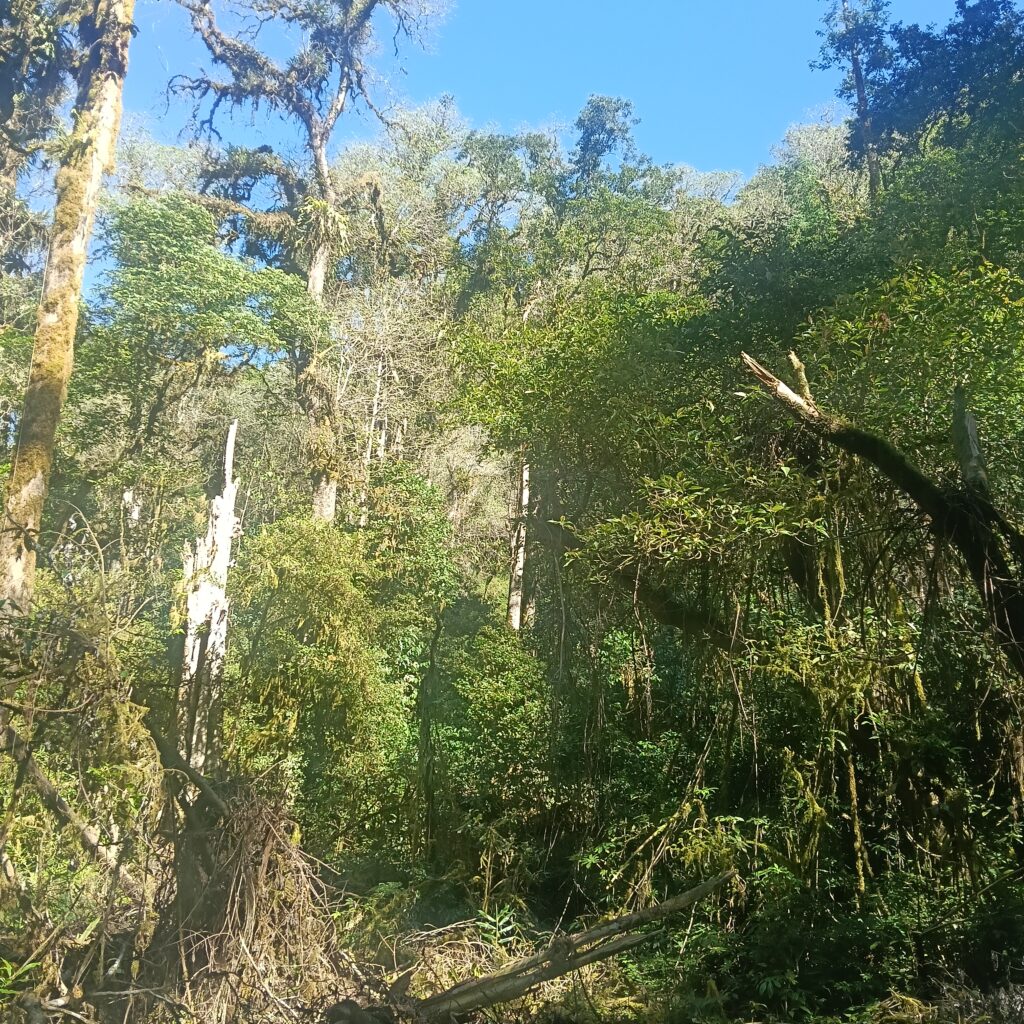
Gradually, many forest paths were abandoned. Nature reclaimed them as giant trees, moss, and tropical vegetation covered the old routes.
Only local farmers, experienced guides, and nearby villagers continued using some of these trails, preserving knowledge that might otherwise have disappeared.
Today, many visitors walk these paths without realizing they once formed part of an important transportation network.
Rediscovering History Through the Tamblingan Forest
Walking through the Tamblingan Highlands today offers more than beautiful scenery. Every trail hints at a forgotten chapter of Bali’s past.
The peaceful forest, ancient trees, hidden temples, and quiet mountain atmosphere allow visitors to imagine life before modern infrastructure, when every journey depended on human endurance and intimate knowledge of the natural world.
Although the forest appears untouched, it has quietly witnessed generations of travelers, traders, farmers, and spiritual pilgrims.
Experience the Ancient Highlands with a Local Guide
Exploring the Tamblingan Highlands with a Bali local guide brings these forgotten routes to life.
Many guides grew up in nearby villages and have inherited stories about traditional farming, forest customs, sacred temples, and the old mountain paths from previous generations. Along the journey, visitors discover not only spectacular rainforest and wildlife but also the cultural landscape that shaped North Bali for centuries.
Rather than simply hiking through the jungle, you are following trails that once connected communities, supported livelihoods, and preserved traditions.
The forgotten trade routes through the Tamblingan Highlands are a reminder that Bali’s forests were once vibrant corridors of commerce, culture, and spirituality. Long before asphalt roads crossed the mountains, these ancient paths linked villages, carried valuable goods, and brought people together across the island’s rugged landscape.
Today, those same trails offer a unique opportunity to step away from modern tourism and experience a quieter side of Bali—where history lingers beneath towering rainforest trees and every footstep follows the legacy of generations who walked these mountains long before us.
For travelers seeking an authentic connection with North Bali, exploring these ancient highland trails is more than a trek—it is a journey through the living history of the Tamblingan Highlands.