Choosing the best time to climb Mount Batukaru is not simply a matter of checking whether it is the dry or rainy season. Mount Batukaru is a high, forested mountain, and conditions can change quickly as you gain elevation.
Rainfall in the days before your trek, trail conditions, cloud cover, and your priorities for the experience can all affect whether a particular day is suitable.
For some travelers, the priority is a better chance of clear sunrise views. Others prefer the deep green rainforest, mist, and cooler atmosphere that can occur after rainfall.
Based on our experience guiding travelers in Bali’s mountain and forest areas, the most important thing is to look at actual conditions around the mountain, rather than relying only on a general seasonal forecast.
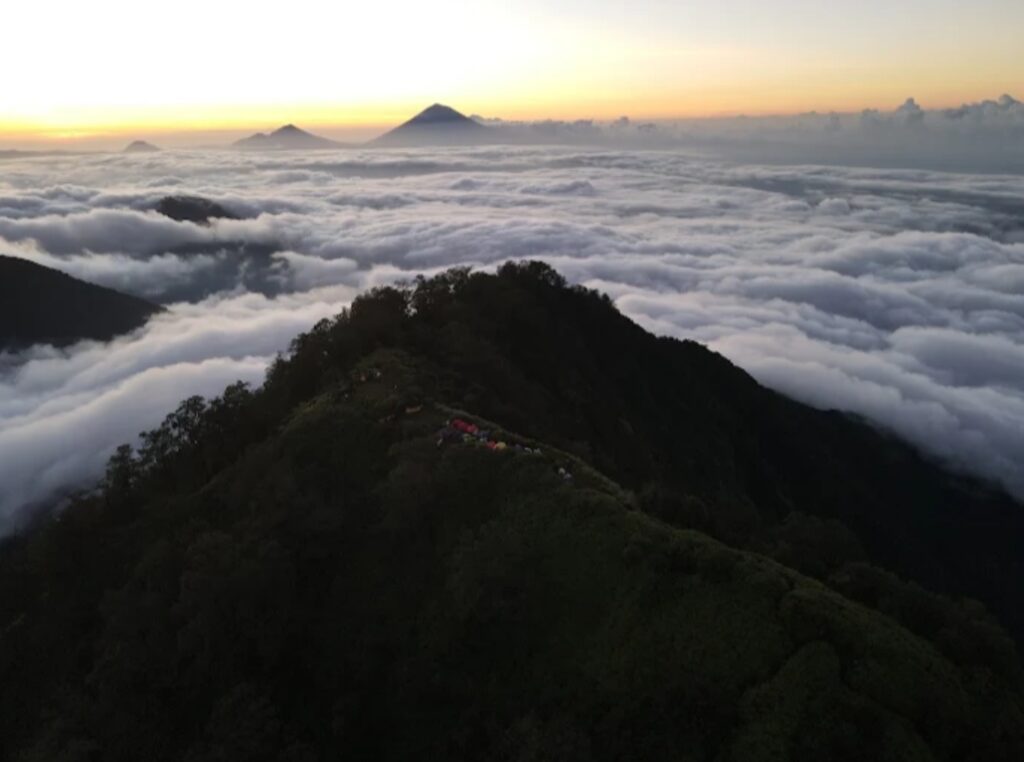
In general, the drier months can offer more favorable trekking conditions, particularly when there has been limited rainfall in the days before the climb.
However, there is no month when Mount Batukaru is guaranteed to have clear skies or dry trails.
Mountains create their own weather patterns, and Mount Batukaru is covered by dense rainforest. Even during the drier season, clouds, mist, and rain can occur.
If your main goal is a comfortable trail and a better chance of clear views, we generally recommend choosing a period with more stable weather.
If you enjoy lush rainforest, mist, and a more atmospheric jungle experience, the wetter months can also be rewarding—provided current conditions are suitable for trekking.
Understanding Mount Batukaru’s Mountain Environment
Mount Batukaru rises to approximately 2,276 metres above sea level and is surrounded by dense tropical vegetation.
The upper mountain environment is very different from Bali’s southern coastal areas. Temperatures are cooler, the forest retains considerable moisture, and weather conditions can change quickly.
This has several consequences for hikers:
- trails can become slippery after rain
- roots and rocks may remain wet even after the rain has stopped
- clouds can reduce visibility
- mist can appear around the higher sections
- streams may become stronger after heavy rainfall
- sunrise views depend heavily on cloud conditions
For this reason, the forecast for your starting point in Bali may not accurately represent conditions on the mountain.
A sunny morning in Ubud or Seminyak does not necessarily mean that the upper slopes of Mount Batukaru will be clear.
Dry Season: April to October
Bali’s generally drier period can provide some of the more favorable conditions for climbing Mount Batukaru.
The exact conditions vary from year to year, so it is better to think of April to October as a broader period of potentially more stable weather, rather than a guarantee of dry conditions.
April: Green Forest and Changing Conditions
April can be an interesting month for Mount Batukaru.
After the wetter months, the rainforest can remain exceptionally green, while rainfall may gradually become less frequent.
However, the trail can still be wet and muddy, particularly after recent rain.
For hikers who enjoy lush vegetation and do not mind some mud, April can provide a beautiful forest experience.
May and June: A Good Balance
May and June can offer a good balance between green scenery and increasingly stable conditions.
The forest remains lush, while extended periods of dry weather can make some sections of the trail easier to walk.
These months can be particularly attractive if you want to experience the rainforest without relying entirely on the wetter-season atmosphere.
Still, mountain weather remains unpredictable, so recent rainfall should always be considered.
July and August: More Stable Weather, Busier Periods
July and August are generally among Bali’s drier months.
For hikers, this can mean a better chance of firmer trail conditions and more favorable weather.
However, dry season does not mean that every morning will be clear.
Cloud can still form around the mountain, and sunrise visibility depends on conditions on the day.
These months can also be a busier travel period in Bali, so travelers who prefer a quieter experience may want to consider weekdays or less popular travel dates.
September and October: A Good Time for Experienced Local Planning
September and October can also be rewarding months for climbing Mount Batukaru, particularly when weather conditions remain stable.
From our local guiding perspective, we pay attention not only to the monthly season but also to how much rain the mountain has received in the days immediately before a trek.
A period of several relatively dry days can make a significant difference to the condition of the trail.
October can also mark the gradual transition toward wetter weather, so conditions can become less predictable later in the month.
Wet Season: November to March
The rainy season creates a very different Mount Batukaru experience.
The rainforest can become intensely green, streams may carry more water, and mist can create a dramatic atmosphere among the trees.
For nature lovers and experienced hikers, this can be beautiful.
However, wet-season trekking requires more caution.
Rain can make:
- muddy sections deeper
- roots and rocks more slippery
- steep sections more difficult
- streams stronger
- visibility lower
- sunrise views less predictable
The decision to trek should therefore be based on current conditions, not simply on whether it is technically possible to climb during the rainy season.
During periods of heavy rain or unsafe trail conditions, a local guide may recommend postponing the trek.
Mount Batukaru Month by Month
| Month |
Typical conditions |
Trail considerations |
Experience |
| January |
Wet |
Often muddy and slippery |
Very lush, misty |
| February |
Wet |
Wet trails possible |
Rainforest atmosphere |
| March |
Transition |
Conditions can vary |
Green and humid |
| April |
Transition |
Some wet sections |
Very green |
| May |
Increasingly dry |
Often improving |
Good balance |
| June |
Generally drier |
Usually more favorable |
Good for trekking |
| July |
Drier |
Often firmer |
Good chance of stable conditions |
| August |
Drier |
Generally favorable |
Good for hiking |
| September |
Drier/transition |
Often favorable |
Good balance |
| October |
Transition |
Variable |
Green, increasingly humid |
| November |
Wetter |
Increasingly wet |
Lush rainforest |
| December |
Wet |
Mud and slippery sections possible |
Very green and atmospheric |
This table should be used as a general guide rather than a guarantee. Conditions can vary considerably from one year to another.
What Is the Best Time for a Mount Batukaru Sunrise?
If your main goal is to experience sunrise from the mountain, weather stability and cloud conditions are more important than the name of the month.
A dry-season morning can still be cloudy, while a rainy-season morning can occasionally produce beautiful clear skies.
For sunrise trekking, we recommend checking:
- rainfall in the days before the trek
- the overnight and early-morning forecast
- cloud conditions at higher elevations
- trail conditions
- the current advice of your local guide
A local guide can also adjust the pace and starting time according to the route and current conditions.
The earlier you start, the more important it is to have appropriate clothing and lighting for the forest sections.
What Is the Best Time for Clear Mountain Views?
If clear views are your priority, periods of more stable weather generally provide a better opportunity.
However, Mount Batukaru is not a viewpoint where clear panoramas can be guaranteed.
Cloud and mist are natural parts of a high mountain environment.
Even when you do not get a long-distance view, walking through misty rainforest can create a completely different and memorable experience.
In fact, some travelers prefer Mount Batukaru precisely because of its forest atmosphere rather than the expectation of a guaranteed panorama.
What Is the Best Time for a Lush Rainforest Experience?
If you want to see Mount Batukaru at its greenest, the wetter months can be particularly interesting.
Rain supports dense vegetation and keeps the forest floor moist. Ferns, moss, vines, and other moisture-loving plants become especially noticeable.
The sound of rain and flowing water can also add to the atmosphere.
The trade-off is that wet conditions make the trail more demanding.
If you are comfortable with mud, humidity, and slower walking, the rainy season can provide a beautiful rainforest experience.
How Does Rain Affect the Mount Batukaru Trail?
Rainfall is one of the most important factors we consider before guiding a group on Mount Batukaru.
The effect is not limited to the moment when it rains.
Rain from the previous day can still affect the trail the following morning.
Wet conditions can make roots, rocks, and steep sections slippery. Water can also accumulate in muddy sections and increase the flow of small streams.
This is why we do not recommend deciding whether to climb based solely on whether the sky looks clear when you wake up.
The weather leading up to the trek can be just as important.
How Early Should You Start?
The appropriate starting time depends on your chosen route, trekking objective, fitness level, and whether you want to reach a particular point around sunrise.
For sunrise-oriented climbs, an early start is necessary because you need enough time to move through the forest before daylight.
A local guide can determine a suitable starting time based on the route and the group’s walking pace.
It is better to allow enough time to walk safely than to rush because of an overly ambitious schedule.
When Should You Avoid Climbing Mount Batukaru?
There are situations when postponing a trek is the better decision.
You should reconsider the climb when:
- heavy rain is expected
- there has been significant rainfall immediately before the trek
- trail conditions are reported to be unsafe
- water levels are unusually high
- there is a risk of storms or lightning
- local authorities or guides advise against trekking
Mount Batukaru is a natural environment. No photograph or summit objective is worth taking unnecessary risks.
A flexible itinerary is particularly valuable during Bali’s rainy season.
Our Local Guide’s Approach to Choosing the Right Day
When guests ask us, “What is the best month to climb Mount Batukaru?”, our answer is usually more practical than simply naming one month.
We look at the combination of:
- recent rainfall
- forecast rainfall
- cloud conditions
- trail conditions
- the guest’s fitness and experience
- the purpose of the trek
- the preferred pace
- sunrise or sightseeing objectives
For example, a traveler who wants a clear sunrise may prefer a period of stable weather.
Another traveler may be more interested in the rainforest and not mind some mist or wet vegetation.
There is no single “perfect” Mount Batukaru experience for everyone.
The best day is the day when the weather, trail conditions, route, and your expectations all match.
Dry Season or Rainy Season: Which Should You Choose?
The answer depends on what you want.
Choose a drier period if you prefer:
- potentially firmer trails
- lower risk of heavy rain
- better chances of stable weather
- sunrise and landscape photography
- a more comfortable trekking experience
Consider the wetter season if you prefer:
- extremely green rainforest
- moss and ferns
- misty forest scenery
- stronger streams and waterfalls
- a more atmospheric jungle experience
However, during wetter periods, flexibility is essential.
Is Mount Batukaru Open During the Rainy Season?
Trekking conditions and access can depend on the route, weather, trail conditions, local regulations, and guidance from the local community.
For this reason, we do not recommend assuming that a trail is suitable simply because it is technically the rainy season or because another traveler climbed the mountain on a previous day.
Always confirm current conditions before setting out.
If weather conditions are unsuitable, postponing your trek can be the safest and most responsible choice.
Why a Local Guide Makes a Difference
Mount Batukaru is not simply a mountain with a marked path.
It is a forested and culturally significant landscape, and conditions can vary considerably.
A local guide can help you understand the trail, monitor changing conditions, and adjust the experience according to the group.
A guide can also share information about:
- the rainforest ecosystem
- local plants
- traditional agriculture
- Balinese culture
- the surrounding villages
- mountain etiquette
- current trail conditions
Most importantly, a local guide can help you make a practical decision when weather conditions are uncertain.
For international travelers, we can also arrange guides who speak English, German, or French, depending on availability, making communication easier throughout the experience.
Responsible Trekking on Mount Batukaru
Mount Batukaru’s rainforest is an important natural environment, so visitors should treat the mountain with respect.
Please:
- stay on appropriate trails
- take your rubbish with you
- avoid picking plants
- do not disturb wildlife
- do not leave food or plastic in the forest
- respect local customs and sacred areas
- follow your guide’s instructions
- avoid unnecessary noise
The goal is to enjoy the mountain without leaving a negative impact behind.
The Best Time to Climb Mount Batukaru Is the Right Time for You
Mount Batukaru changes with the weather.
During drier periods, the trail can be more comfortable and the chances of stable conditions may improve. During wetter periods, the rainforest becomes exceptionally green, mist can transform the landscape, and streams may become more active.
Neither experience is automatically better.
The most important thing is to choose a trekking day based on current mountain conditions, your physical ability, and what you want from the experience.
If you are planning to climb Mount Batukaru, a local guide can help you assess the conditions before the trek and choose a route and starting time that suit your group.
Rather than chasing a particular month, focus on finding the right conditions for your particular Mount Batukaru experience.